El Chupacabra: Puerto Rico’s Blood-Drinker and a Sci-Fi Movie (1995)
ARCHIVE FILE · Event year: 1995. This happened in 1995 and is not breaking news. It’s part of the Redacted Weekly evergreen archive.
Most cryptids come from old folklore. The chupacabra, Spanish for “goat-sucker,” has a much more recent origin: Puerto Rico in 1995. Farmers found dead animals with puncture wounds, someone blamed a blood-draining creature, and within a few years the name had spread across Latin America and the U.S. Southwest.
CASE FILE · RW-ARC-CRY-006
Subject: Spiny, bipedal, blood-drinking creature (1995 version); hairless dog-like animal (later version)
When: March 1995 onward
Where: Puerto Rico; later Mexico, Texas and beyond
Key witness: Madelyne Tolentino of Canóvanas (named in press reports)
Evidence: Livestock deaths; witness descriptions; later animal carcasses
Status: The original creature was never found; the carcasses were identified
Goats actually sucked: Unconfirmed
How it started
The first attack later linked to the chupacabra came in March 1995, when eight sheep in Puerto Rico were found dead, each reportedly with three puncture wounds to the chest and said to have been completely drained of blood. More livestock and pet deaths followed. In August 1995, a Canóvanas resident, Madelyne Tolentino, reported seeing the creature: an upright, spiny-backed, large-eyed being. Her account became the template for the chupacabra.
Before the name: the “Vampire of Moca” (1975)
Puerto Rico had dealt with a similar scare twenty years before. In 1975, unexplained livestock deaths in the municipality of Moca were blamed on el vampiro de Moca, the “vampire of Moca.” People at first suspected a Satanic cult. As in 1995, accounts described small, round puncture wounds and animals that looked drained of blood. So the 1995 wave wasn’t the first time the island had read these signs as the work of a vampire.
Who named it
The name chupacabras is generally credited to Puerto Rican comedian and entertainer Silverio Pérez, who used it on his San Juan radio show in 1995 while talking about the attacks. The original Spanish form is chupacabras. “Chupacabra” developed later as a singular form. The number of reports grew quickly. Puerto Rico had more than 200 in 1995, and claims at the time put the Canóvanas death toll as high as 150 animals. These figures are how the reports were counted, and nobody verified them.
The movie problem
Investigator Benjamin Radford found a striking detail. Tolentino’s description is almost identical to Sil, the alien in the science-fiction horror film Species, released in July 1995. Tolentino had seen the film before her sighting. According to Radford, she believed the events in the movie were happening in reality in Puerto Rico at the time. He concluded that “the most important chupacabra description cannot be trusted.”
The creature changes
By the 2000s, “chupacabras” found in Texas and elsewhere looked nothing like a spiny biped. They were hairless, grey, four-legged dog-like animals. In one well-known case, a carcass found near San Antonio and nicknamed the “Elmendorf Beast” was identified through DNA testing at the University of California, Davis, as a coyote with sarcoptic mange.
How the scare spread, and what investigators found
As the name spread, so did reports, and each one ended in an ordinary answer:
- Chile (2000–2002): Around a hundred farm animals near the mining city of Calama were reportedly drained or mutilated. Our sources say none of the incidents produced evidence of anything extraordinary. In one widely reported case, a farmer killed a güiña, a small wild cat native to the area.
- Argentina (2002): Media linked mutilated cattle to the chupacabra. The national animal-health agency, SENASA, concluded the damage was caused by foxes or rats.
- Texas (2004–2010): After the Elmendorf animal, more carcasses were found in the same area that October. Texas biologists identified them as coyotes with very severe mange. In 2010, Texas A&M scientists identified another “chupacabra” from Hood County as a coyote–dog hybrid with mange and parasites.
- Maine (2006): A DNA sample from a roadside carcass showed a wolf–dog hybrid.
- Argentina (2013): A “small unidentified animal” turned out to be a naturally mummified cat.
What Radford’s book adds
In Tracking the Chupacabra, Radford charts ten significant reported attacks. Seven had a carcass recovered and examined, and those examinations found ordinary animal attacks as the cause. He also documents confirmed coyote kills in which the prey was left mostly uneaten with only puncture wounds, which matches what people call the chupacabra signature.
The descriptions themselves are another problem. Depending on the report, the creature has thick skin or fur, wings or none, a tail or no tail, and looks like a bat, a dog or an alien. It’s hard to believe these all describe one animal. The more likely pattern is that people had the name fresh in their minds and used it to explain any odd-looking animal they saw.
About our image
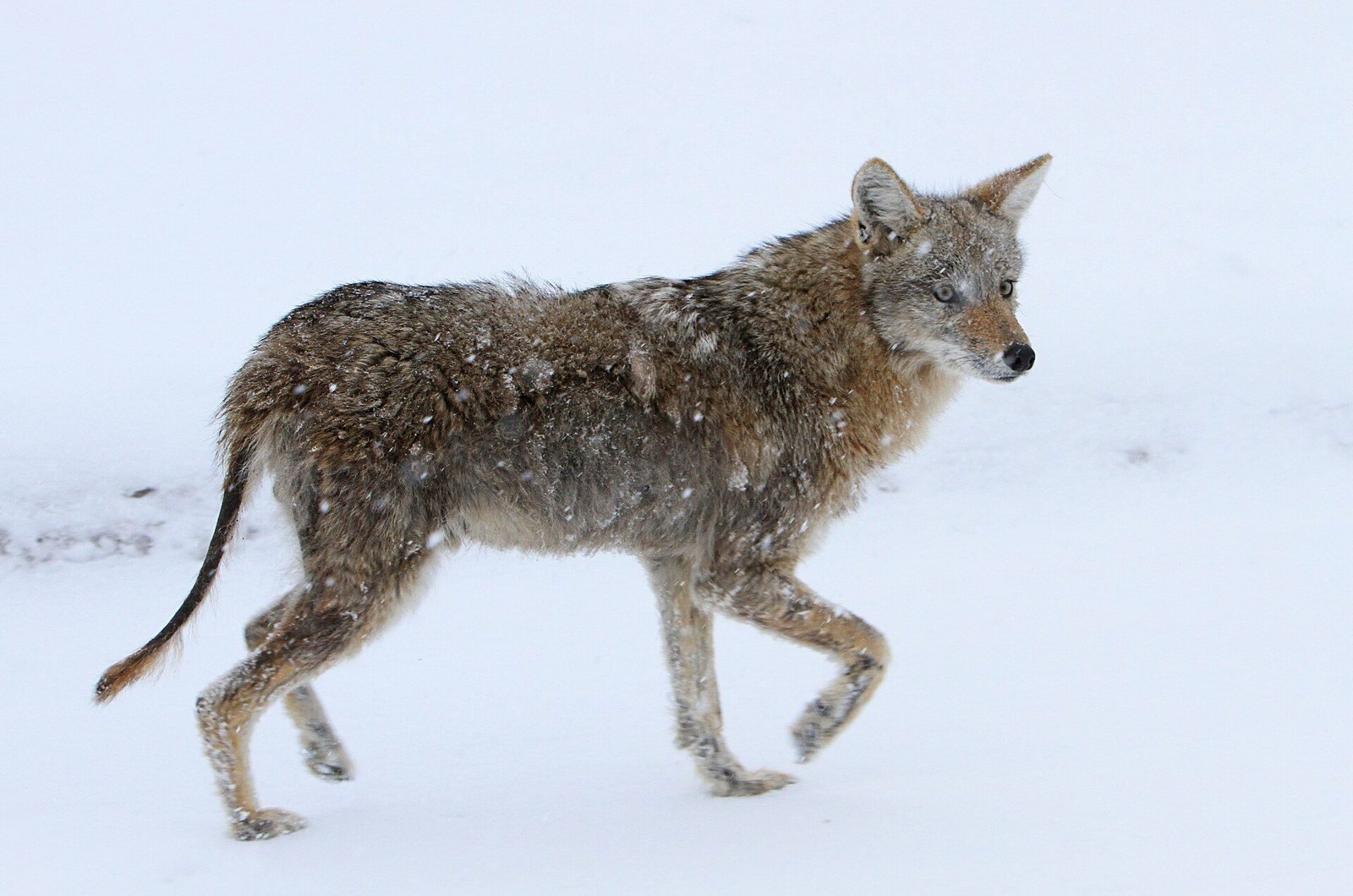
The featured photo is a mangy coyote photographed by the National Park Service in Yellowstone, not a chupacabra. We chose it because sarcoptic mange in coyotes is the confirmed explanation for the modern “chupacabra” carcasses. As a U.S. government work, it’s in the public domain.
Grades
| Claim | Grade | Source |
|---|---|---|
| Livestock deaths with wounds were reported in Puerto Rico in 1995 | CONFIRMED | Wikipedia summary; Radford |
| Tolentino reported a sighting in Canóvanas in Aug 1995 | CONFIRMED | Radford, Tracking the Chupacabra (2011) |
| Her description was shaped by the film Species | CREDIBLE | Radford’s interviews and comparison |
| Animals were “completely drained of blood” | UNVERIFIED | Claims made at the time; not supported by necropsy evidence in our sources |
| Later “chupacabra” carcasses were mangy coyotes or dogs | CONFIRMED | DNA testing (e.g., UC Davis on the Elmendorf animal) |
| A similar “Vampire of Moca” livestock scare occurred in 1975 | CONFIRMED | Wikipedia, “Chupacabra” |
| Silverio Pérez coined the name in 1995 | CREDIBLE | Generally credited, per Wikipedia |
| Argentine cattle “mutilations” (2002) were caused by foxes or rats | CONFIRMED (per SENASA) | Wikipedia summary |
| Other “chupacabra” carcasses were hybrids or a mummified cat | CONFIRMED | DNA or expert identification, per Wikipedia |
Log in to view the rest of this file
The rest of this file is open to any agent: free accounts get full access.
Log InCreate a free account