The Enfield Poltergeist: London’s Most Famous Haunting (1977)
Subject: Poltergeist activity: knocks, moving furniture, thrown objects, a “voice”
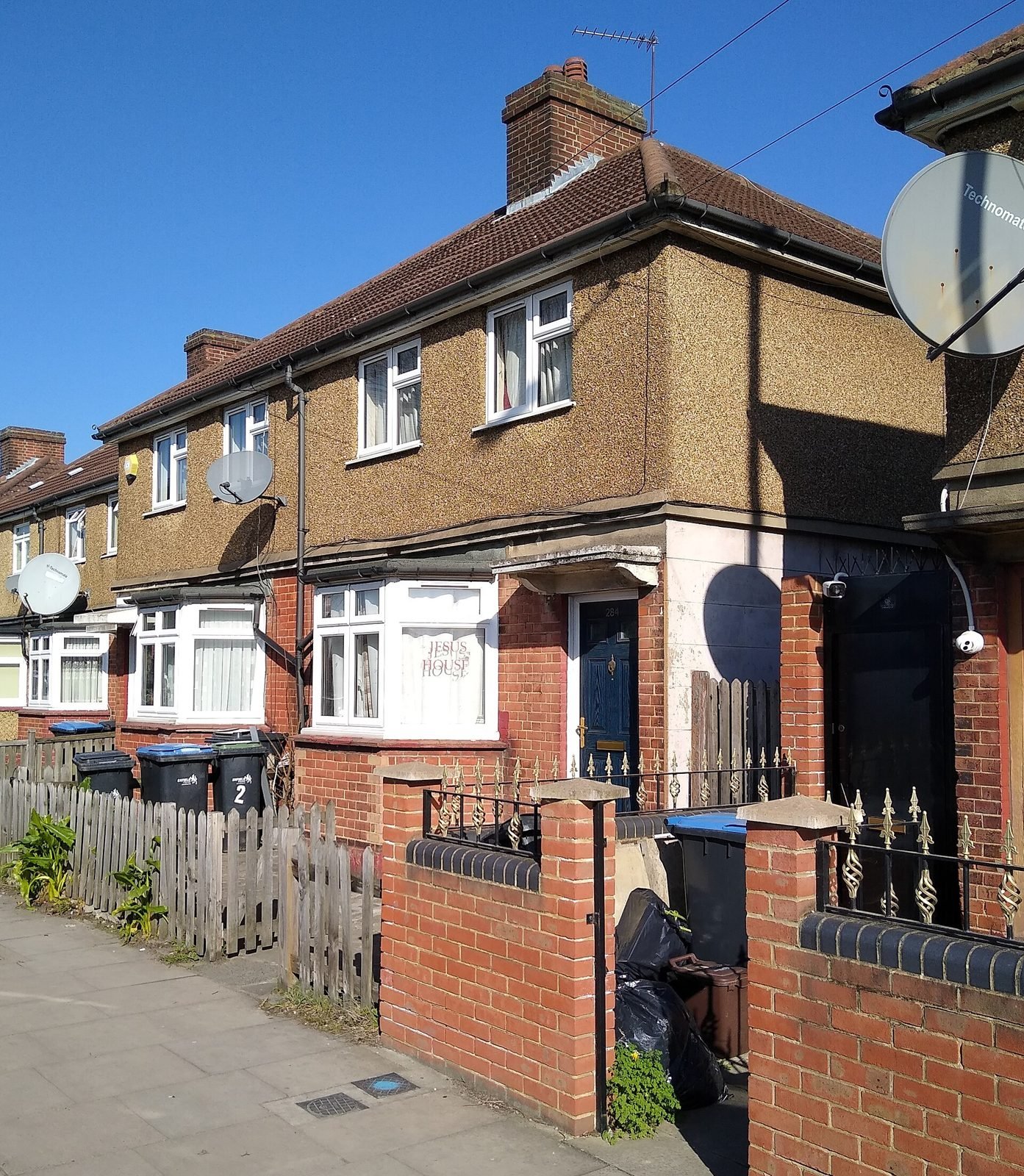
Event: Disturbances reported at a council house on Green Street, Brimsdown, Enfield, August 1977 to about 1979
First report: Police called in August 1977 · Last checked: 4 Nov 2026
Location: Enfield, north London
Status · Grade: Disputed; evidence of partial faking (lip movement during the demon voice: “hardly” any, per a believing investigator)
ARCHIVE FILE · Event year: 1977–1979. This happened in the late 1970s and is not breaking news. It’s part of the Redacted Weekly evergreen archive. More cases: [Paranormal](/category/paranormal/).
What happened
In August 1977, a single mother living with her four children in a council house on Green Street in Enfield, north London, called the Metropolitan Police. She said furniture had moved, and two of the children said they’d heard knocking on the walls, per Wikipedia’s sourced summary. Over about 18 months, the case became a tabloid sensation, an investigators’ feud, and much later the inspiration for The Conjuring 2.
The disturbances centered on the two middle daughters, then aged 11 and 13. They’re not named here because they were children at the time. More than 30 people, including neighbours, journalists and investigators, said they’d heard knocking, seen objects move or witnessed other odd events. The Daily Mirror covered the story regularly. Later the younger girl appeared to speak in a gravelly male voice that claimed to be a former occupant.
The footage
Video: “1977: The ENFIELD POLTERGEIST | Nationwide | Weird and Wonderful | BBC Archive,” uploaded by BBC Archive on 30 October 2023, 12 min 48 s. The upload description says the clip comes from Nationwide, originally broadcast on BBC One on 23 November 1977. The description says reporter James Hogg visited the house, where residents reported knocking in the walls and furniture being thrown around. It quotes the line: “Either 17 people have all been having hallucinations – including the police – or this is the best-documented ghost story of all time.” It also says investigator Maurice Grosse believed his recordings might be the best evidence yet of a poltergeist. This is a contemporary news report. It doesn’t show any object moving under controlled conditions.
Timeline
- August 1977: The mother calls the police; Nickell dates the start to 30 August.
- 23 November 1977: BBC One’s Nationwide airs its report.
- 1978: At an SPR conference in Cambridge, Enfield videotapes are examined and doubts raised about the voice.
- 26 December 1978: BBC Radio 4 broadcasts The Enfield Poltergeist, by reporter Rosalind Morris.
- About 1979: The activity fades out after roughly 18 months.
- 1980: Guy Lyon Playfair publishes This House Is Haunted.
- 1992: The BBC airs the drama Ghostwatch.
- July/August 2012: Joe Nickell’s analysis appears in Skeptical Inquirer.
- 2015: Sky airs the drama The Enfield Haunting.
- 17 June 2016: Chris French’s “five reasons” piece runs in Time Out, around the release of The Conjuring 2.
- 2019: Melvyn Willin publishes The Enfield Poltergeist Tapes.
What witnesses reported
The police constable. The officer who came to the house, a policewoman, reported seeing a chair “wobble and slide” but said she was not able to tell what caused it. Wikipedia and Nickell both describe the report this way. Chris French later cited the policewoman’s account in making his point that eyewitnesses are unreliable.
The investigators. Society for Psychical Research (SPR) members Maurice Grosse and Guy Lyon Playfair spent long stretches in the house and made hours of recordings. They reported whistling and barking noises that seemed to come from the younger girl. Grosse described the poltergeist’s timing: “It’s smarter than we are. Look at its timing—the moment you go out of a room something happens. You stay in the room for hours, and nothing moves. It knows what we’re up to.” Nickell quotes him from Playfair’s 1980 book. The American demonologists Ed and Lorraine Warren also visited briefly. According to skeptic Brian Dunning, Ed Warren “tried to persuade Playfair that money could be made from this case by writing books and selling movie rights.”
What the research found
Caught on camera, by the investigators. The strongest trickery evidence came from the believers’ own equipment, per Wikipedia’s summary of Playfair’s and Grosse’s accounts. A video camera in an adjoining room caught the younger girl bending spoons and trying to bend an iron bar. Grosse himself saw her banging a broom handle on the ceiling and hiding his tape recorder. Playfair noted that one of her voices, “Bill,” had a “habit of suddenly changing the topic,” and added that the girl had the same habit. When the sisters admitted pranking to journalists, Grosse and Playfair got them to retract the confessions.
Log in to view the rest of this file
The rest of this file is open to any agent: free accounts get full access.
Log InCreate a free account