The Brown Lady of Raynham Hall: The Most Famous Ghost Photo (1936)
Subject: Photograph of the “Brown Lady,” the reputed ghost of Raynham Hall
Event: Photographed 19 September 1936
First report: Country Life, December 1936; LIFE, 4 Jan 1937 · Last checked: 4 Nov 2026
Location: Main staircase, Raynham Hall, Norfolk, England
Status · Grade: Archive case · Ghost UNVERIFIED
What happened
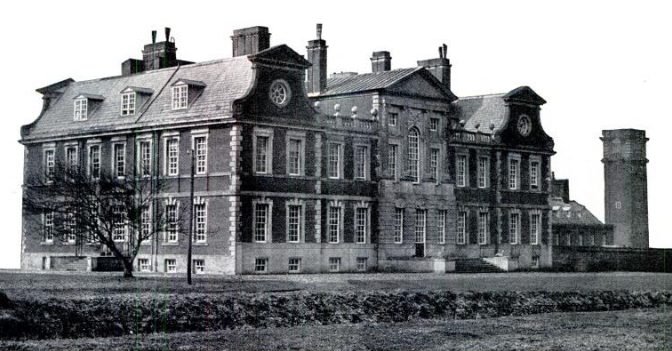
If you’ve seen one ghost photograph, it’s probably this one: a pale, hooded figure apparently gliding down a grand oak staircase. It was taken at Raynham Hall in Norfolk, England, on 19 September 1936, by Captain Hubert C. Provand and his assistant Indre Shira. The two professional photographers were on assignment for Country Life. Shira said he saw “a vapoury form gradually assuming the appearance of a woman” coming down the stairs. When the negative was developed, the figure was on it.
The footage
There is no film. The evidence is a single negative and the photographers’ account. The photo is widely reproduced; see the Wikipedia article linked below. Printed copies are often cropped and darkened, which hides the doubled details discussed below.
Timeline
- 1726: Lady Dorothy Townshend, née Walpole (b. 1686), the sister of Robert Walpole, dies at Raynham, of smallpox according to the record.
- Christmas 1835: Guests, including a Colonel Loftus, report a lady in a brown dress.
- 1836: Captain Frederick Marryat’s reported encounter.
- 1891: Florence Marryat publishes her account of it.
- 1926: Lady Townshend reports that her son and a friend saw the figure on the stairs.
- 19 September 1936: Provand and Shira take the photograph.
- December 1936: Country Life publishes it.
- 4 January 1937: LIFE reprints it.
- 1984 and 1987: Cohen, and then Fairley and Welfare, publish the superimposition analysis.
What witnesses reported
Florence Marryat, writing in 1891, called the house’s ghost one “which we have always called ‘The Brown Lady of Rainham.'” She wrote that her father “discharged the revolver right in her face,” and that the figure “instantly disappeared.”
Shira’s 1936 account, as reproduced on hoaxes.org: “All at once I detected an ethereal veiled form coming slowly down the stairs. Rather excitedly, I called out sharply: ‘Quick, quick, there’s something.’ I pressed the trigger of the flashlight pistol.” Afterwards, Provand “removed the focusing cloth from his head and turning to me said: ‘What’s all the excitement about?'”
What the research found
Harry Price was impressed. The investigator interviewed the pair and wrote: “I will say at once I was impressed.” He also wrote: “Only collusion between the two men would account for the ghost if it is a fake. The negative is entirely innocent of any faking.” His second point matters, because an untouched negative still allows for an in-camera double exposure.
Log in to view the rest of this file
The rest of this file is open to any agent: free accounts get full access.
Log InCreate a free account