The Jersey Devil and the Panic Week of 1909
ARCHIVE FILE · Event year: 1909. This happened in 1909 and is not breaking news. It’s part of the Redacted Weekly evergreen archive.
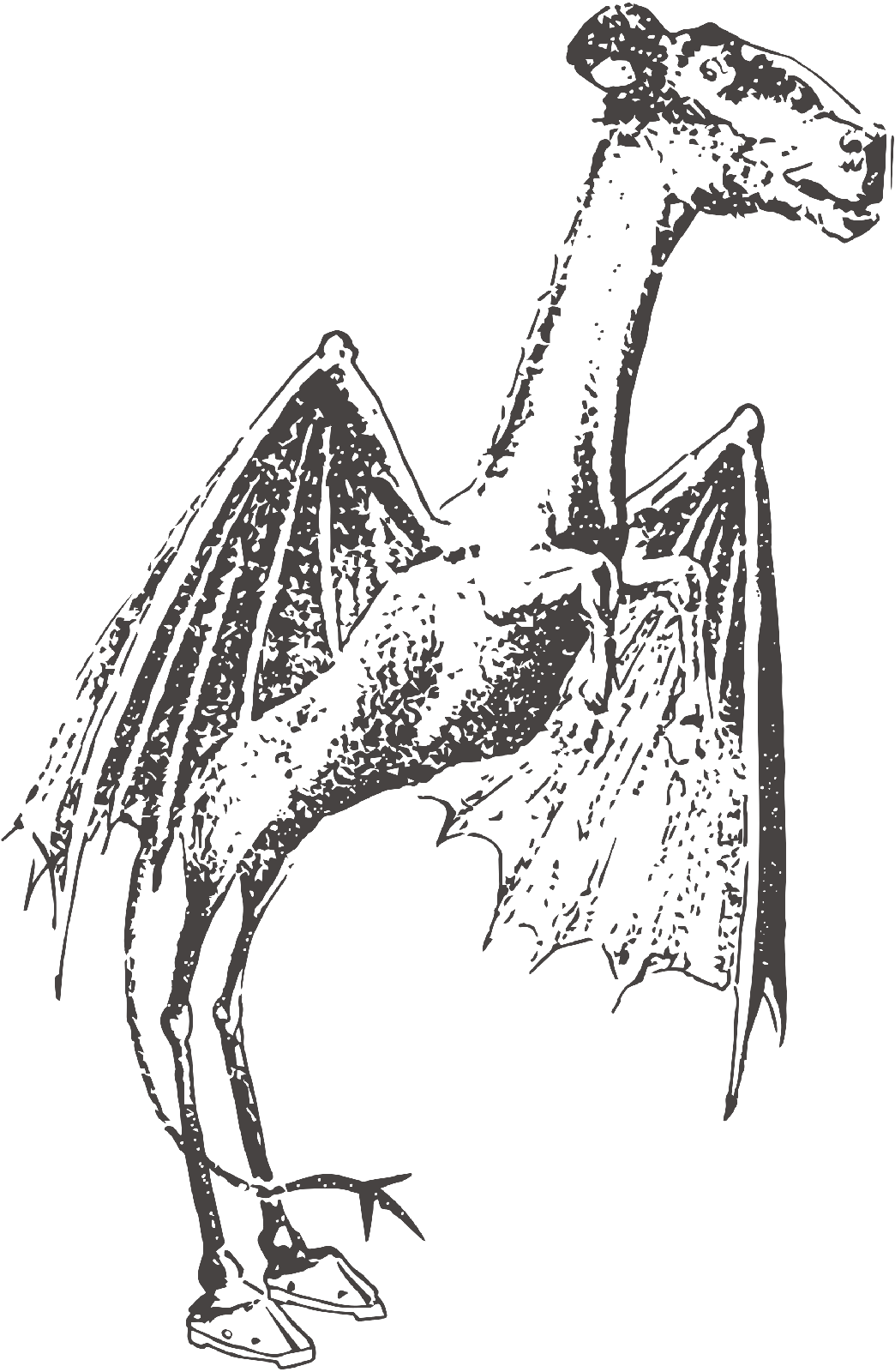
New Jersey’s Pine Barrens cover more than a million acres of sandy soil, scrub pine and cedar swamp, and they’ve been home to a monster story for centuries. The Jersey Devil, or Leeds Devil, is said to have a horse-like head, bat wings, hooves and a forked tail. In January 1909 it seemed to show up everywhere at once.
CASE FILE · RW-ARC-CRY-003
Subject: Winged, hoofed creature with a horse-like head
When: Legend dated to 1735; sighting wave 16–23 January 1909
Where: South Jersey Pine Barrens; Philadelphia and its suburbs
Witnesses: Hundreds, per newspaper reports of the week
Evidence: Reported footprints; newspaper accounts; sketches
Status: State-level folklore; namesake of an NHL team
Kangaroos with fake wings involved: At least one
The legend
The best-known version goes like this: in 1735, a woman known as “Mother Leeds,” already the mother of twelve, learned she was pregnant again and cursed the child. The thirteenth baby was born normal, then turned into a winged creature and flew up the chimney into the pines. The name Leeds is tied to a real South Jersey family, and historians have suggested that political and religious rivalries of the colonial era helped spread a “devil” story about them. Printed references to a “Jersey Devil” don’t appear until the 20th century.
The real Leeds family behind the legend
The Leeds family was real, and their story explains a lot about how the legend formed. Some researchers identify “Mother Leeds” with Deborah Leeds of Leeds Point, in what is now Atlantic County. Her husband Japhet Leeds named twelve children in his 1736 will, which fits the “twelve, then a thirteenth” story. That match is suggestive but not proof.
Historian of science Brian Regal of Kean University argues that the legend grew out of the reputation of the whole family rather than from one woman. His account runs like this:
- Daniel Leeds, a prominent Quaker surveyor loyal to the Crown, published almanacs from 1687 that contained astrology. His Quaker community considered them “pagan” and censored them. Leeds kept writing about occult and mystical subjects, eventually turned Anglican, and published attacks on the Quakers. Critics accused him of working for the devil.
- His son Titan Leeds took over the almanac business in 1716 and competed with Benjamin Franklin’s Poor Richard’s Almanack. In 1733, Franklin jokingly “predicted” Titan’s death. When Titan didn’t die, Franklin kept up the joke by treating him as a ghost.
- In 1728, Titan began printing the Leeds family crest on his almanacs. It showed a wyvern, an upright, bat-winged, dragon-like creature on two clawed feet. Regal points out how closely it resembles later descriptions of the Devil.
The “Leeds Devil” had become a standard South Jersey ghost story by the late 1700s or early 1800s. The Atlantic Monthly wrote about the folk tales in 1859, and an 1887 newspaper reported sightings of “the Devil of Leeds.” The modern name “Jersey Devil” and the standard look only settled in the early 20th century.
Famous names attached to the story
According to legend, Commodore Stephen Decatur fired a cannonball at the creature, and Joseph Bonaparte, Napoleon’s older brother, saw it while hunting near Bordentown around 1820. Neither story has a contemporary record in our sources, so they stay legends.
The week of 16–23 January 1909
During that week, newspapers printed hundreds of claimed encounters across South Jersey and the Philadelphia area. People reported strange hoofprints in the snow, including on rooftops, and sightings of a flying creature. Search parties went into the woods, and some schools and businesses reportedly closed. This flap fixed the creature’s popular image. Newspaper sketches like the one used here gave the Devil its now-standard shape.
In 1909, the reports went beyond footprints. Newspapers said the creature “attacked” a trolley car in Haddon Heights and a social club in Camden, and that police in Camden and in Bristol, Pennsylvania, fired at it with no effect.
Rewards and hoaxes
Merchants around Camden reportedly offered a $10,000 reward for capturing the creature, and it was rumored that the Philadelphia Zoo had offered the same. Predictably, hoaxes followed. One of the best known was a kangaroo with artificial claws and wings, exhibited as the captured Devil.
What skeptics and scholars suggest
- Sandhill cranes: Jeff Brunner of the Humane Society of New Jersey suggested that stray cranes, which are big, loud and unfamiliar in South Jersey, explain part of the legend. He added: “There are no photographs, no bones, no hard evidence whatsoever.”
- Mass hysteria: Medical sociologist Robert E. Bartholomew and Peter Hassall call the 1909 week a classic case of mass hysteria set off by a regional legend.
- A people as well as a place: The Pine Barrens had a rough reputation. Loyalist gangs called the “Pine Robbers” preyed on travelers, and outsiders looked down on the isolated residents. Stories about monsters fit the way outsiders saw the region.
Rutgers professor Angus Kress Gillespie described the Devil as “an obscure regional legend” for most of its history. Today it’s mostly a commercial and cultural mascot, found on T-shirts, postcards and cocktail menus.
Grades
| Claim | Grade | Source |
|---|---|---|
| Newspapers printed hundreds of sightings during 16–23 Jan 1909 | CONFIRMED | Contemporary newspapers; Wikipedia summary |
| The Mother Leeds origin story (1735) | Folklore (UNVERIFIED) | Oral tradition; no contemporary record |
| A $10,000 reward was offered | CREDIBLE (Camden merchants) / UNVERIFIED (zoo rumor) | Wikipedia summary of period accounts |
| Hoaxers exploited the panic | CONFIRMED | Documented exhibits, including the “winged kangaroo” |
| A real unknown creature lives in the Pine Barrens | UNVERIFIED | No physical evidence |
| Japhet Leeds’s 1736 will named twelve children | CREDIBLE | Wikipedia, “Jersey Devil” |
| The Leeds family crest showed a wyvern (Titan Leeds’s almanacs, from 1728) | CREDIBLE | Brian Regal, via Wikipedia |
| Decatur and Joseph Bonaparte saw the Devil | UNVERIFIED | Legend only |
| The 1909 week was mass hysteria | CREDIBLE | Bartholomew & Hassall |
Log in to view the rest of this file
The rest of this file is open to any agent: free accounts get full access.
Log InCreate a free account